店铺
店铺
 EN
EN CN
CN VI
VI IT
IT ES
ES TH
TH JA
JA PT
PT MS
MS KO
KO FR
FR DE
DE ID
IDDesigning a dexterous robotic hand requires more than fitting motors into small spaces. Each finger must move through a useful range, apply controlled force, respond to commands, and coordinate with other joints while remaining within strict limits on size and weight. Choosing the right actuator is therefore an important step in determining how well a robotic hand performs real tasks, from grasping small objects to manipulating tools.
A suitable Φ16mm Micro Joint Actuator can help address these requirements by combining compact dimensions with integrated motion control. For engineers developing robotic fingers, the selection process should consider torque requirements, gear ratio, position feedback, communication interfaces, electrical compatibility, and mechanical integration together. Evaluating these factors early can reduce redesign work during prototype development and make the transition toward production more predictable.
Start with the Mechanical Requirements of Each Finger Joint
Not every joint in a dexterous hand performs the same task. A joint near the base of a finger may need to move a larger portion of the finger structure, while a distal joint may primarily control the orientation of the fingertip. The loads, motion ranges, and response requirements can differ significantly between these positions.
Before selecting an actuator, engineers should identify the mechanical requirements of each joint. Useful information includes the mass and geometry of the moving components, the distance between the joint axis and the applied force, the required angular range, and the expected speed of movement.
The required joint torque can be estimated from the external force and its moment arm, with additional allowances for the inertia of moving components, friction, and transmission losses. The design should also account for the difference between holding an object and moving it. A finger may require relatively little torque during an unloaded movement but substantially more when grasping an object or resisting an external disturbance.
For a compact design, the actuator must meet these requirements without occupying too much of the available finger volume. Its mounting geometry, cable routing, and connection to adjacent links should be considered alongside its rated performance.
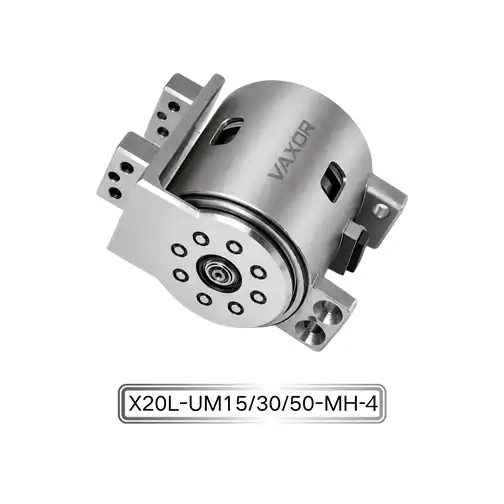
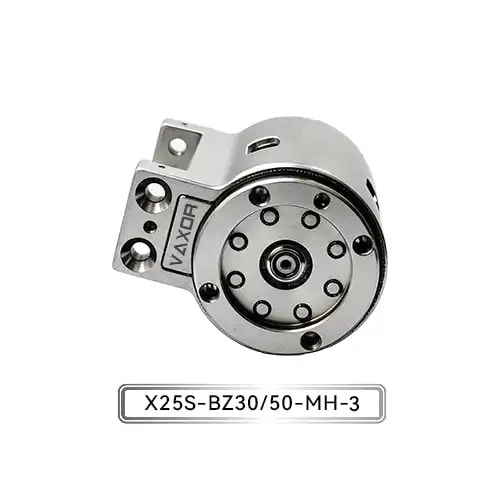
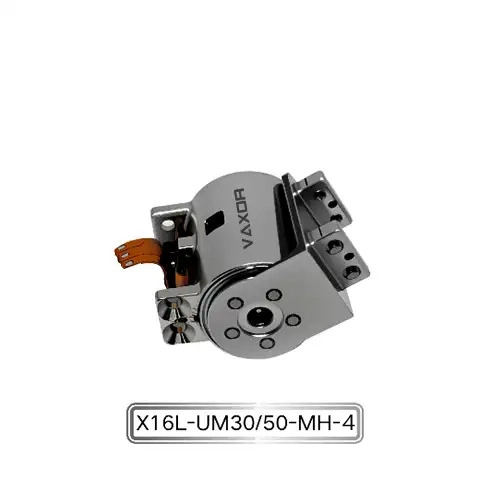
The Φ16mm Micro Joint Actuator is designed for highly integrated robotic systems and dexterous hands. Its compact module format provides a starting point for evaluating how actuation can be incorporated into limited joint spaces. Final suitability still depends on the mechanical loads and motion requirements of the particular hand design.
Match Continuous Torque to Real Operating Loads
Torque is one of the most important specifications when comparing joint actuators, but the meaning of each torque rating must be understood before it is used in a design calculation.
The X16S/L-UM30/50-MH-4 model is specified with continuous torque of up to 200 mNm and initial torque of up to 400 mNm. These figures describe different operating conditions and should not be treated as equivalent.
Continuous torque is relevant when assessing the load that a joint must handle over an extended operating period, subject to the manufacturer's specified conditions. Initial torque describes a different operating point and should not automatically be interpreted as a continuous output capability. Engineers should confirm the exact definition, duration, and test conditions associated with the initial torque specification before using it to size a mechanism.
Consider a finger joint that must maintain a grasp for several seconds or longer. The required torque should be assessed against the continuous operating capability, including the effects of motor temperature, transmission efficiency, and the intended duty cycle. If the finger also needs to accelerate rapidly or overcome a brief increase in resistance, its transient torque requirements should be evaluated separately.
A practical selection process should include three checks:
Estimate the torque needed for the intended grasping and manipulation tasks.
Allow for friction, external disturbances, and variation between operating conditions.
Verify that both sustained and short-duration loads remain within the applicable actuator limits.
Avoid sizing a joint solely around the highest torque figure in a product specification. A more reliable design uses the torque needed during normal operation as its starting point and then evaluates transient demands, safety margins, and thermal constraints.
Choose the Gear Ratio for the Required Motion
The gear ratio influences the relationship between motor rotation and joint output. A higher reduction ratio generally provides greater torque multiplication while reducing output speed, although the actual result depends on the motor characteristics and transmission efficiency.
The Φ16mm Micro Joint Actuator is available with 30:1 and 50:1 gear ratio options. These configurations give engineers an opportunity to match the drive to different joint requirements rather than relying on a single configuration for every finger.
当关节需要输出速度和扭矩之间的平衡时,30:1 的比率可能值得评估。当设计更加强调扭矩倍增并且可以适应输出速度的相关降低时,50:1 的比率可能是合适的。这些是一般工程考虑因素,不保证每种操作条件下的性能差异;应针对每种配置确认相关的速度-扭矩数据。
选择还取决于机器人手的使用方式。设计用于快速重新定位的手指可能与旨在保持牢固握持或针对阻力执行受控操作的手指具有不同的优先级。
在比较这两个选项时,工程师应该评估:
所需的关节速度和角行程。
输出轴所需的扭矩。
加速和减速要求。
传动效率和机械间隙(如果适用)。
控制变化负载下的响应。
考虑控制系统也很重要。满足静态扭矩要求的齿轮比可能无法提供期望的移动时间或对命令的响应。测试所需的输出扭矩和预期的运动曲线可以帮助确定哪种配置是合适的。
考虑位置反馈和角度精度
精确的手指运动取决于完整的控制系统,而不仅仅是执行器的机械结构。位置感测允许控制器估计关节位置并根据测量的状态调整其命令。
X16S/L-UM30/50-MH-4 使用绝对式磁编码器,指定角度精度高达 0.02°。此功能可能与需要受控关节定位的应用相关,特别是当机器人手必须协调多个手指或以有限的间隙操纵物体时。
绝对编码器提供参考定义的角度位置的位置信息,但确切的行为取决于编码器的实现和控制架构。工程师应验证主机控制器如何初始化、传输和解释位置数据。他们还应该区分编码器分辨率和系统级定位精度。
即使执行器具有高精度编码器,整个机构也可能因机械顺应性、安装公差、间隙、结构变形或校准偏移而引入误差。指尖的实际位置还取决于手指连杆的几何形状和多个关节的组合运动。
因此,验证不应局限于检查编码器读数。有用的原型测试可测量关节运动,并在可能的情况下测量代表性负载下的指尖定位。在不同位置重复这些测量可以揭示在单独测试执行器时不明显的机械效应。
尽早规划SPI通信接口
执行器的 SPI 通信接口是集成过程中的另一个重要考虑因素。工程师应确定执行器如何与主控制器通信以及如何在可用控制周期内管理多个关节。
SPI是一种同步串行通信接口,常用于电子设备之间的通信。其实现需要注意信号连接、时钟配置、时序以及所连接硬件的电气特性。执行器的具体命令结构和通信时序应从其技术文档中获得,而不是从通用 SPI 标准中假设。
对于多关节机械手,通信规划应不仅仅涵盖控制器是否可以读取位置数据。设计团队应考虑协调移动所需的更新速率、处理命令所需的时间、故障检测以及通信中断的处理。
有用的集成清单包括:
确认控制器与执行器接口的电气兼容性。
根据产品文档验证信号连接和通信时序。
在扩大规模之前,使用一个执行器测试位置数据读取和命令执行。
测量预期控制工作负载下的通信延迟。
定义系统如何响应丢失数据或通信错误。
这些检查可以在将多个执行器安装到紧密包装的手部结构内之前识别集成问题。它们还有助于确保通信设计支持预期的运动控制策略。
考虑重量和安装空间
灵巧的手通常包含多个执行器、结构连杆、传感器、接线和保护组件。即使每个模块的重量或尺寸很小的差异也会影响最终的设计,特别是当手必须安装在轻型机械臂上时。
Φ16mm 微关节执行器的指定重量为 24.3–26.1 g,具体取决于配置。工程师在计算手的总质量时应使用所选版本的重量,而不是依赖于单一的近似数字。
重量的重要性不仅仅在于总有效载荷。执行器的放置会影响移动手指段的惯性。远离关节轴的额外质量会增加加速所需的扭矩并改变机构的响应。这可以在设计中形成反馈回路:较重的组件需要更大的扭矩,这可能会影响执行器配置和支撑结构的选择。
机械集成还应包括安装间隙、紧固件通道、接线路径、连接器方向以及组装和维护空间。在生产物理原型之前,CAD 配合检查可以揭示相邻模块、指状链接和电缆之间的干扰。
一旦布局确定,就可以使用物理模型或早期原型来确认执行器是否可以按计划安装和维修。当多个关节必须安装在狭窄的手指或手掌结构内时,这一点尤其有价值。
验证完整手指组件中的执行器
规格对于筛选候选执行器至关重要,但它们无法完全预测关节在成品手中的表现。因此,原型测试应在反映其预期应用的条件下评估执行器。
从基本功能检查开始,包括通电行为、通信、位置反馈和卸载运动。接下来,引入代表性机械负载并评估预期操作周期内关节的速度、扭矩需求、运动一致性和温度。
对于灵巧的手,测试还应该包括重复的抓握和释放。应在不同的关节位置和不同的物体尺寸或阻力水平下评估手指。这些测试可以揭示与机械干扰、负载分布、运动协调或控制器调整相关的问题。
有用的测量包括:
关节运动时间和位置响应。
代表性负载下的输出行为。
重复运行时的电流消耗和温度。
预期运动序列的可重复性。
多关节操作时的通信可靠性。
耐久性测试期间观察到的机械磨损或松动。
测试计划应反映预期的工作周期和环境。如果手要执行频繁的重复性任务,则短暂的演示不足以建立长期的可靠性。应根据项目的性能和使用寿命要求来计划耐久性测试和检查。
与微驱动技术合作伙伴合作
为灵巧的手选择执行器通常涉及机械设计、电机工程、嵌入式控制和制造之间的协调。在这些领域拥有丰富经验的供应商可以帮助开发团队阐明规格并评估从原型转向可重复生产的可行性。
VAXOR成立于2024年,总部位于中国苏州,为机器人、医疗器械、精密仪器和智能设备开发微型关节执行器和超微型空心杯电机。其技术途径集电机设计、精密制造、机器人控制、结构设计、智能制造于一体。
该公司还利用轴向磁通电机、PCB/FPCB 绕组、优化电磁设计和微型减速机构等技术开发紧凑运动解决方案。其团队致力于工程开发和生产实施,重点是将高性能微驱动技术从原型验证转向可扩展制造。
When evaluating a module for a robotic hand, engineering teams should share the intended application, joint load estimates, target speed, motion range, voltage requirements, control architecture, and installation constraints. They should also confirm which specifications apply to the exact model and gear ratio being considered.
For the Φ16mm Micro Joint Actuator, the combination of a 12 V or 24 V supply option, 30:1 or 50:1 gear ratios, an absolute magnetic encoder, and SPI communication provides several key parameters for this evaluation. The final decision should be based on verified technical documentation and prototype testing under the intended operating conditions.
Final Checklist for Selecting a Finger-Joint Actuator
Before finalizing an actuator for a dexterous hand, verify the following points:
Mechanical load: Estimate the required torque, including friction, acceleration, and external forces.
Torque rating: Distinguish continuous torque from initial torque and confirm their specified operating conditions.
Gear ratio: Compare the required output speed and torque for the 30:1 and 50:1 options.
Position feedback: Confirm encoder behavior, accuracy specifications, calibration requirements, and controller compatibility.
Communication: Validate SPI electrical connections, timing, and data handling.
Size and weight: Check module clearance, total hand mass, cable routing, and assembly access.
Thermal and endurance performance: Test the actuator during representative repetitive tasks.
Production readiness: Confirm documentation, configuration details, and validation requirements before scaling the design.
Choosing a suitable micro joint actuator is a system-level engineering decision. Torque, gear ratio, feedback, communication, weight, and mechanical layout must work together to deliver the required finger movement. By evaluating these factors before final integration, developers can reduce avoidable redesigns and build a stronger technical foundation for reliable dexterous robotic hands.
The Φ16mm Micro Joint Actuator offers a compact motion module with defined torque, gear ratio, encoder, and communication options for this evaluation. Working with VAXOR and validating the selected configuration against real application loads can help engineering teams determine whether the module meets their robotic hand's requirements.